Pathology is the causal study of the diseases by examining the body tissues sample (e.g. biopsies/pap smears) and body fluids (e.g. blood/urine etc.). It creates a bridge between the health science and medicine. Pathology cover every aspect of the patients care, starting from diagnostics to treatment advices and prevention. In general, Pathologists work with physicians, scientists, nurses and healthcare professionals in hospitals and GPs’ surgeries to diagnose, prevent and treat illness. The whole segments of pathology comprise of more than 20 different disciplines starting from general disciplines like cytopathology, histopathology, chemical pathology, hematopathology, anatomical pathology, medical microbiology to more advanced digital pathology.
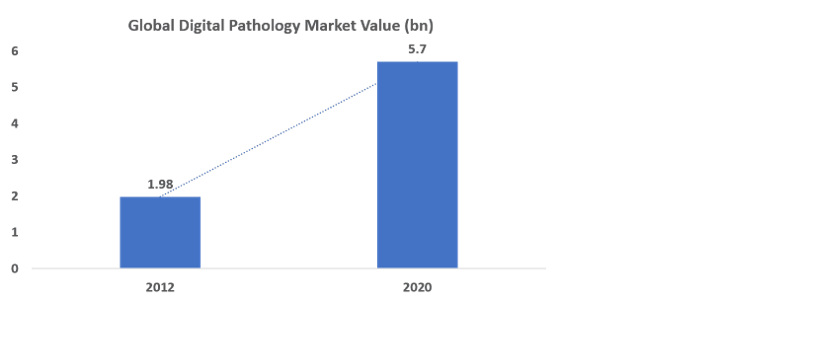
The global Digital Pathology market worth about $1.98bn in 2012 and is expected to hit $5.7 billion by 2020. Automation of the conventional pathology methods is the major driving force for this market, which leads to the improvements in workflow efficiency, efficiency in analysis. The other driving factor include fast and accuracy in results, availability of diagnostics facilities in the remote areas, cost reductions, reduction in procedural cost starting from delivery of slide to data. The major drawback is the strict regulatory approval process for the digital pathology systems. The other limiting factors are: digital pathology system integration cost, and standardization of technology and data interpretation format among countries. The Whole slide imaging (WSI) is the highest revenue generating segment in this arena with the highest growth potential.
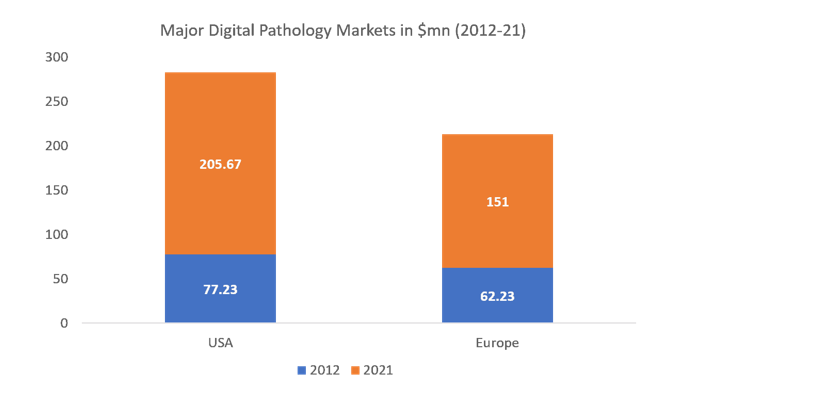
It is estimated that the Europe Digital Pathology Market to hit $151m by 2021 from $62.3m in 2012. During the same period, the USA Digital Pathology Market will reach $205.67mn from $77.23mn at a CAGR of 17%. Among all the countries, North America will dominate the Digital Pathology market followed by Europe, Latin America and Asia Pacific. Asia Pacific will witness the fastest growth (at a CAGR of 13.4%) during the forecast period. Growth will be supported by the increased number of cancer patients, increased demand of novel patient care facilities and reduced laboratory expenses.
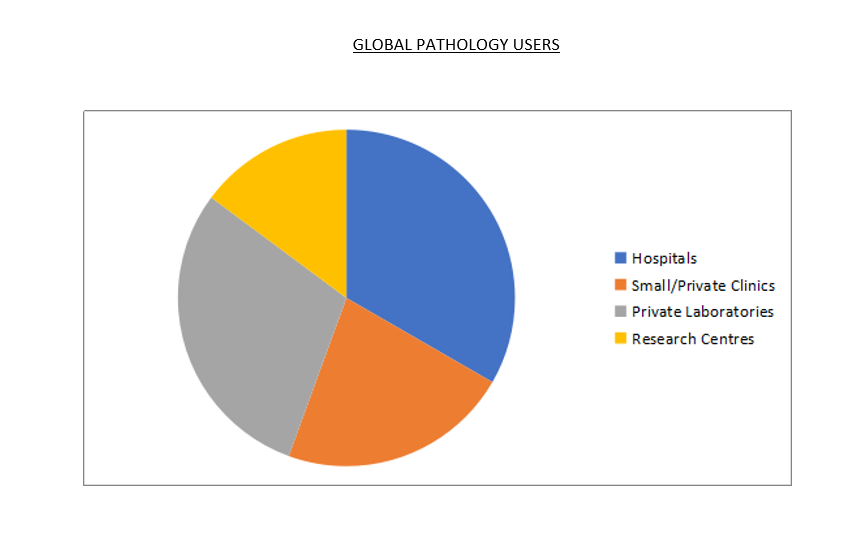
Anatomic Pathology plays a key role towards the study, diagnosis and treatment of various chronic diseases such as infectious diseases and Cancer. It includes the analysis of biopsy or body parts to diagnose a disease. It is also very important in Pharmaceutical Industries to perform toxicological studies. This Anatomic Pathology market has a huge growth potential fueled by the increased prevalence of chronic diseases, increased aging population and moreover increased health care expenditures across the globe. The global Anatomic pathology market can be segmented into products type and service. The Pathology service market can be segmented into reagents, consumables, instruments, and services. The instruments can be segmented into slide strainers, tissue processers, microtomes, and application market can be segmented to drug discovery, diagnosis. Products in terms of users’ ca are segmented into Diagnostic Laboratories, hospitals, and Research organizations.
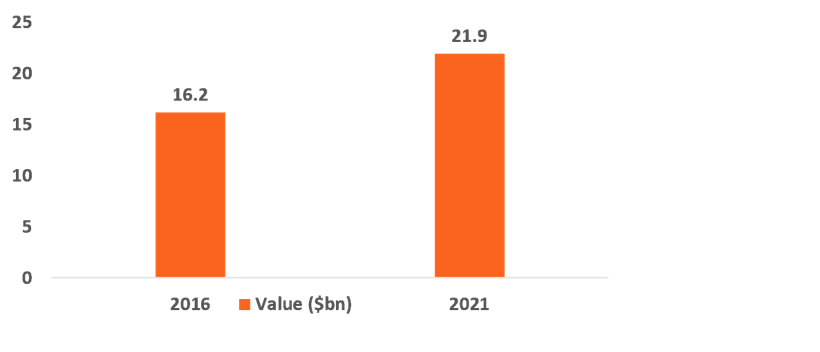
The Anatomic Pathology market is dominated by the North America, followed by Europe, and Asia. This growth is attributed to the rapid increase in chronic disease prevalence, increasing aging population, growing demand of personalized medicine, presence of big market and huge investment of both government and private bodies. The Anatomic Market valued about $16.2bn in 2016 with the potential to reach to $21.9bn by 2021 at a CAGR of 6.1%.
Global Anatomic Pathology Market Value ($BN), 2016-2021
Revenue of pathology
With more than 33 organizations overall giving of computerized pathology equipment, programming pathology and administrations, the worldwide advanced pathology showcase is evaluated to reach roughly $4.5 billion by 2018. Digital Pathology Market is depended upon to gather $1,052 million by 2022. Digital pathology is a rising advancement in the field of pathology. Digitization of pathology has incited the computerization of the tests in the midst of investigation, in this way saving cost and tries. The net effect has been incredible cost-diminish in entire cost of characteristic methodologies and organizations.